
How to Write Donor Thank-You Letters That Build Relationships
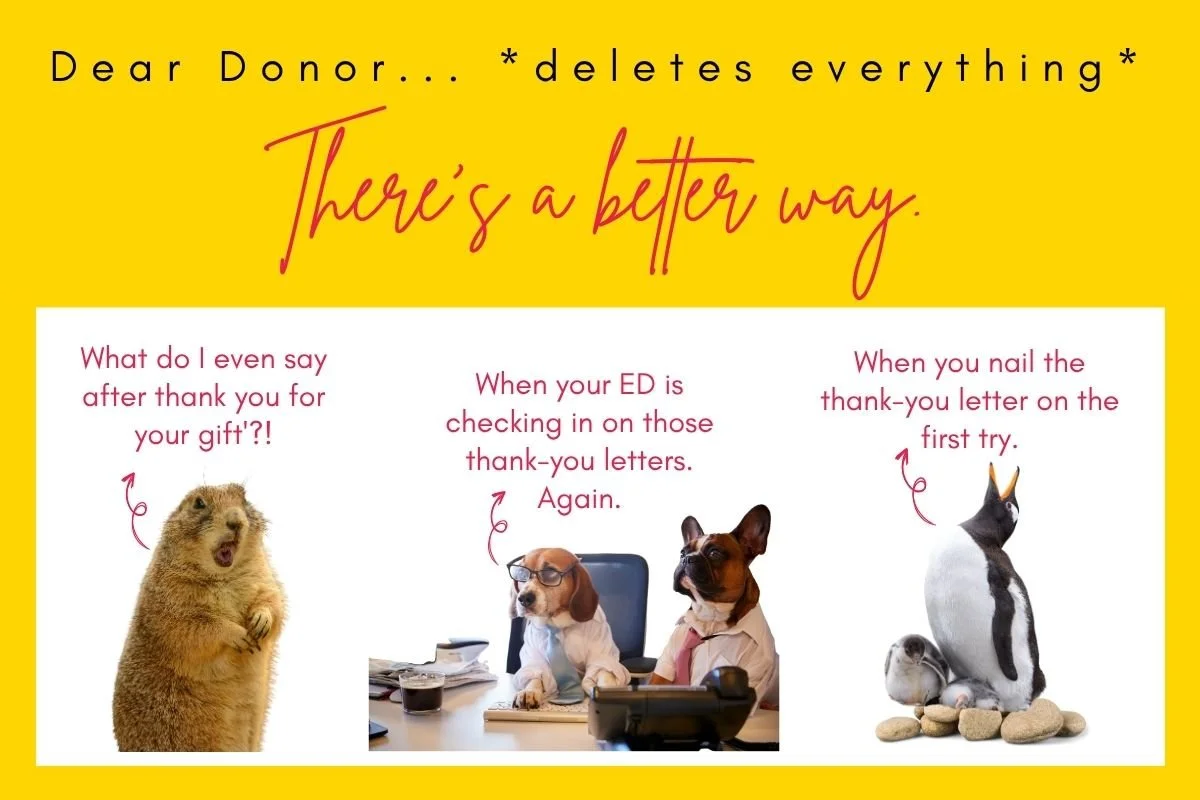
Sound familiar? July's blog post shows you how to write donor thank-you letters that actually build relationships — and why getting it right changes everything.
Why most donor thank-yous feel transactional — and how to write gratitude that increases connection, retention, and builds lasting partnerships
Over the last 16 years, something has shifted in the way we relate to each other — and not entirely for the better. Transactions have replaced conversations. Speed has replaced depth. And somewhere along the way, the idea of genuinely connecting with the people you serve got crowded out by the next tactic, the next tool, the next shiny thing everyone else seems to be doing.
I've told my sons for years: it doesn't take much to stand out anymore. There's a quote I keep coming back to — "Go the extra mile. It's never crowded." In business, in fundraising, in life, that's still true. Maybe truer now than ever.
What I keep telling my clients is this: the focus is on connection, not a quick fix. It's not about how to acquire the next donation or close the next purchase. It's about finding the people who believe in the change you are making in the world — and giving them a reason to ride alongside your mission for the long haul.
That's what relationship-based fundraising is. And nowhere does that philosophy get tested more quickly — or more quietly — than in the thank-you letter that arrives after someone's first gift.
The Moment That Determines Everything
Here's a scenario that plays out in nonprofit offices everywhere.
A donation comes in. Someone — usually whoever has bandwidth that day — sends a quick thank-you email. Maybe it includes the donor's name and gift amount. Maybe it references the organization's tax ID for their records. It's polite. It's efficient. And then everyone moves on. If you’re a larger organization, you likely have this automated, making it even less personal.
A few months later, that same donor doesn't give again. The nonprofit wonders why.
The answer is often hiding in that thank-you. Or rather, in what the thank-you didn't do.
Research shows that 21% of donors report never being thanked at all, and another 8% say they received no information about how their gift was used. Among donors who stop giving, the top reasons are simple: they weren't kept informed about impact, and they didn't feel valued.
But here's the more troubling truth: many donors did receive thank-yous. They just didn't feel them. The messages were so generic, so transactional, so focused on the organization's needs rather than the donor's contribution, that they barely registered.
Donor thank-you letters aren't receipts. They're the beginning of a relationship. And when written with genuine intention, they're one of the most powerful donor retention strategies you have.
Why Donor Retention Matters More Than Ever
For four consecutive years, donor retention has declined. According to the Fundraising Effectiveness Project, overall donor retention sits at just 31.9%. That means nonprofits are losing nearly 70% of their donors year over year — not because those donors stopped caring, but because they stopped feeling connected.
The numbers are even more stark for new donors. First-time donor retention is at historic lows — only 14% of new donors give again. Almost 70% of donors give only once to an organization, and 23% churn within six months of their first gift.
This matters because acquiring new donors costs significantly more than retaining existing ones. On average, nonprofits spend $1.25 to raise $1.00 from a new donor. The only reason to invest in acquisition is to sustain those donors over time — and that sustainability starts with how you make them feel after they give.
Here's the opportunity hiding inside these numbers: donors who give twice have a 63% likelihood of giving again. That second gift — what fundraising professionals call the "golden donation" — changes everything. And the path to that second gift almost always runs through the thank-you letter that followed the first one.
Research from Penelope Burk, author of Donor-Centered Fundraising, found that 70% of donors would increase their giving if nonprofits simply gave them what they needed: timely gratitude, information about impact, and communication that made them feel valued as people — not transactions.
That's not complicated, but let’s be honest, it's just not happening consistently. And in a world where transactional relationships have become the default, the nonprofits that choose connection instead stand out.
What Makes a Donor Thank-You Letter Fail
Most thank-you letters fail because they're written from the organization's perspective rather than the donor's.
They focus on what the organization did or will do. They use language like "your donation will help us" rather than "you made this possible." They read like receipts — confirming a transaction — rather than expressions of genuine human gratitude.
Effective donor thank-you letters do something different. They make donors feel seen, valued, and connected to impact. They answer the questions donors have: Did my gift matter? Do these people care that I gave? What difference did I make?
Let’s talk about what makes the difference.
Send a Thank You Within 48 Hours
Timing matters more than most nonprofits realize. Research shows that donors are four times more likely to give again if they're thanked within 48 hours. The longer you wait, the more the moment — and the connection — fades.
This doesn't mean a thank-you must be perfect within 48 hours. It means donors need to hear from you quickly. An automated, immediate acknowledgment, followed by a more personal letter within a week, works well. What doesn't work is waiting until you have time to craft the perfect message, only to send it three weeks later, by which point the donor has moved on.
Urgency in gratitude signals that the gift mattered. Delay signals that it didn't.
Make It Personal
Donor stewardship that retains people requires personalization. Donors who receive personalized thank-yous are 41% more likely to give again — and personalization doesn't require custom letters for every donor. It means using what you know to make the gratitude feel specific to this person.
At minimum:
Use their name — correctly spelled, with their preferred nickname if they use one
Reference their specific gift amount
Acknowledge whether they're a first-time donor, a repeat supporter, or a monthly giver
Note any connection they have to your work — attended an event, volunteered, referred a friend
These details signal that you see them as individuals, not as line items in your donor database. In a world of copy-paste gratitude, that specificity is the extra mile. And as I said, it's never crowded out there.
Write for the Donor, Not the Organization
This is where most donor thank-you letters go wrong. They talk about the organization rather than the person who gave.
Run your letter through what fundraising professionals call the "you/we test." Count how many times you use donor-centric language versus organization-centric language. You want far more "you" than "we."
Instead of: "Your donation will help us continue our important work."
Try: "You made it possible for 15 families to access emergency food assistance this month."
Instead of: "We're grateful for your support as we expand our programs."
Try: "Because of you, we can reach 200 more students this year."
The shift is subtle but powerful. One centers the organization. The other centers the donor's agency — their choice, their impact, their partnership in your mission. That's the difference between a transactional receipt and a relational thank-you.
Show Specific Impact
Generic statements about "making a difference" or "supporting our mission" don't give donors a concrete sense of what their gift accomplished. And vague gratitude produces a vague connection.
If you followed the story collection system I wrote about in February, you already have what you need. Pull a specific example from your work and connect it directly to the donor's contribution.
For a $50 gift: "Your $50 provided art supplies for one child in our after-school program for an entire semester — paints, paper, and the quiet confidence that comes from creating something beautiful."
For a $500 gift: "Your $500 covered the cost of job training materials for one participant. It gave someone like James the skills and confidence to secure full-time employment for the first time in three years."
Notice what these examples do: they state what the money bought (tangible), and they hint at the human impact (intangible). Both matter. Data tells donors where the money went. The story shows them why it mattered.
Let Gratitude Stand Alone
Many nonprofits can't resist including another ask in their thank-you letters. DON’T.
A thank-you letter is not the place to mention your upcoming campaign, ask donors to volunteer, or remind them about monthly giving. Those are valid communications — they just belong in different messages.
Think of it this way: if someone gave you a birthday gift and you responded by immediately mentioning your Christmas list, you'd come across as transactional at best and rude at worst. The same principle applies here. Let gratitude be the whole point. Donors will notice.
How to Structure Your Donor Thank-You Letter
The structure of an effective thank-you letter doesn't need to be complicated. It needs to be human.
Opening: Lead With Genuine Gratitude
Start with thank you. Not "we received your gift" or "this letter acknowledges your donation." Just — thank you.
Use the donor's name and reference their specific gift: "Thank you, Julie, for your generous gift of $100."
If appropriate, add a warm handwritten note at the top of the printed letter before the main text. Research shows this personal touch significantly increases engagement. Something as simple as "Your support means the world to us!" written by hand makes the entire letter feel less like a form and more like a conversation.
Middle: Connect the Gift to Real Impact
This is where you show donors that their gift landed somewhere meaningful.
"Because of supporters like you, we served 127 families this month through our emergency food pantry. That means parents like Sarah didn't have to choose between groceries and rent. It means children went to bed with full stomachs. Your $100 helped make that possible."
If you created an annual report this spring and have been repurposing that content since April, you have stories ready to use. Pull one that aligns with what this donor supported. The work you've already done is waiting to be used here.
Closing: Reinforce the Relationship
End by thanking them again — warmly and genuinely, without pivoting to another ask.
"Thank you again for your generous support. We're honored to have you as part of our community."
Include contact information in case they have questions. Make it easy to reach you. And sign the letter from someone with authority — your executive director, development director, or board chair. A real signature, not a printed one, signals that a human being took the time to acknowledge this specific person's gift.
Building a Gratitude System That Goes Beyond One Letter
Are you seeing a theme here? A system for your stories, a system for your content, and now the thank-you.
One thank-you letter is a start. Sustained donor retention requires a system.
Research shows that the most effective thank-you strategies use multiple touchpoints:
An immediate automated acknowledgment within minutes of the gift
A personalized thank-you letter or email within 48 hours
A phone call for mid-level and major gifts within one week
An impact update within 30-60 days showing what their gift accomplished
This might sound overwhelming for a small team. It doesn't have to be.
Use your CRM to automate immediate acknowledgments. Draft two or three thank-you templates you can personalize quickly for different donor segments. Dedicate one afternoon per month for staff or board members to make thank-you calls to mid-level donors. Schedule impact updates as part of your regular newsletter cycle — the one you've been building since February.
The key is consistency. Donors who feel consistently appreciated are exponentially more likely to give again. Connection isn't a single gesture; it's a practice.
Tailoring Gratitude to Different Donor Segments
Not all donors should receive identical thank-yous. Tailoring your approach based on giving history and relationship depth shows donors you're paying attention — which is the whole point.
First-Time Donors
These donors need extra care. Remember: only 14% will give again without intentional stewardship.
Your thank-you should welcome them into your community, reinforce why their support matters, and clarify what the relationship will look like going forward. Consider including a brief "what to expect" note that explains how often you'll communicate and what kinds of updates they'll receive. Make them feel like they've joined something — not just completed a transaction.
Repeat Donors
Acknowledge their loyalty explicitly. "Thank you for your continued support" or "We're so grateful you've chosen to give again" recognizes that they had other options — and they chose you. Again.
If you have their giving history, mention it: "This is your third gift this year" or "You've been supporting our work for five years." This signals that you're tracking their relationship with you, not just their dollars. That's the difference between donor data and donor knowledge.
Monthly Donors
Monthly givers have retention rates up to 90% and an average lifetime value of $7,604. They deserve to be treated accordingly.
Thank them not just for individual gifts but for their sustained commitment: "Your monthly support provides the steady foundation that makes our work possible all year long." Consider sending quarterly impact reports specifically to monthly donors, showing what their cumulative giving has accomplished. They're not giving once — your gratitude shouldn't feel like it either.
Major Donors
For gifts above your major donor threshold, thank-you letters should be paired with phone calls and, where appropriate, in-person conversations.
The letter itself can be more detailed — explaining specifically how their gift will be used and inviting them into a deeper relationship with your work. Offer a site visit. Introduce them to the program staff. Provide more detailed outcome reports. Major donors aren't just writing checks. They're investing in your mission. Treat them like partners.
Common Mistakes That Undermine Your Donor Thank-You Letters
Even well-intentioned thank-yous can quietly damage donor relationships. Here's what to watch for:
Waiting too long. The 48-hour window matters. After a week, the emotional moment has passed, and the connection has cooled.
Writing about the organization instead of the donor. Run the you/we test before every letter goes out. If "we" dominates, rewrite it.
Using language that's generic. "Your gift will make a difference" could apply to any nonprofit anywhere. Be specific about your work and what this particular gift made possible.
Including another ask. Let gratitude stand alone. Save the next appeal for a different communication.
Misspelling their name or getting details wrong. This one is personal for me. My name gets butchered constantly — it's Kristin. Not Kersten, Keirsten, Christine, Kristen, or Christian. Just Kristin. Two i's, no -en at the end. When someone gets my name wrong in a thank-you, it tells me they didn’t look at who I am. Your donors feel the same way. Check the spelling. Use their preferred name. Get it right. If you call them, ask for clarification on how to pronounce their name.
Sending only a tax receipt. A receipt confirms a transaction. A thank-you builds a relationship. Send both — but make sure the thank-you feels like it came from a human being who's genuinely glad this person gave.
Using overly formal language. Unless your organizational culture requires formality, write as if you're talking to another person. Having warmth is not unprofessional. It's what people remember.
Measuring Whether Your Donor Stewardship Is Working
How do you know if your thank-you letters are improving donor retention? Track these metrics over time:
First-time donor retention rate: Are more new donors giving a second time?
Overall donor retention rate: Are you keeping more donors year over year?
Time to second gift: How long does it take first-time donors to give again?
Donor feedback: What do donors say when you ask them directly about their experience?
If you improve your thank-you process and these numbers don't shift over 6-12 months, something isn't working. Ask donors directly. A simple survey — "We're working to improve how we thank our supporters. What would make you feel most valued?" — will tell you more than any benchmark report can.
Their answers are the extra mile. Most nonprofits never ask.
The Thank-You Letter Is Just the Beginning
Effective donor thank-yous aren't isolated gestures. They're the first step in an ongoing relationship — the opening line of a conversation you hope continues for years.
When you thank donors well — quickly, personally, with specific impact and genuine human warmth — you lay the groundwork for everything that comes next. You make the next ask easier. You increase the likelihood they say yes. You build the kind of donor loyalty that sustains organizations through difficult seasons and uncertain funding climates.
We live in a world where transactional relationships have become the norm. That's not changing anytime soon. But it means the organizations that choose connection — that choose to go the extra mile in expressing gratitude — stand out in ways that compound over time.
Your donors chose to believe in your mission. They chose to ride alongside you with their resources. The least we can do is thank them like we mean it.
Ready to Build a Donor Stewardship System That Works?
If you're realizing your donor thank-you letters need work — or if you don't have a consistent stewardship system at all — you're not alone. Most small nonprofits are so focused on the next campaign that gratitude becomes an afterthought. And every year, that costs them donors they worked hard to attract.
But stewardship isn't separate from fundraising. It's what makes fundraising sustainable.
I help nonprofits build donor communication systems that work with limited capacity — systems that increase retention without requiring your team to start from scratch every time someone gives. That includes donor stewardship plans, thank-you letter templates, and the communication infrastructure that makes gratitude feel consistent rather than chaotic.
Through The Sunflower Project, I partner with one nonprofit each quarter to strengthen organizational development and marketing communications at no cost. If you're ready to stop losing donors and start building lasting relationships, I'd love to talk.
Contact me to schedule a consultation, learn more about The Sunflower Project, or apply for a quarter of support. Ready to get started right away? Email me and let's find time to connect.
Gratitude Isn't Optional. It's Strategic.
Great donor relationships don't start with big asks. They start with genuine gratitude — specific, timely, human, and focused entirely on the person who gave.
When you thank donors well and consistently, you create the conditions for long-term support. You turn one-time givers into repeat supporters. You build the kind of donor base that rides alongside your mission, not just this year, but for years to come.
Go the extra mile. Write the thank-you that means something.
It's never crowded out there.
Coming Next Month
In August, we're talking about artificial intelligence — and before you click away, I promise this isn't about robots replacing your development team. It's about something much more practical: how small nonprofits can use AI tools they likely already have access to, to work smarter with the donor data they already own.
Only 13% of nonprofits are currently using AI for donor prospecting. That means this is still an edge — and August's issue is going to show you exactly how to use it without expensive software, a data science degree, or giving up an entire Saturday in an attempt to figure it out.

